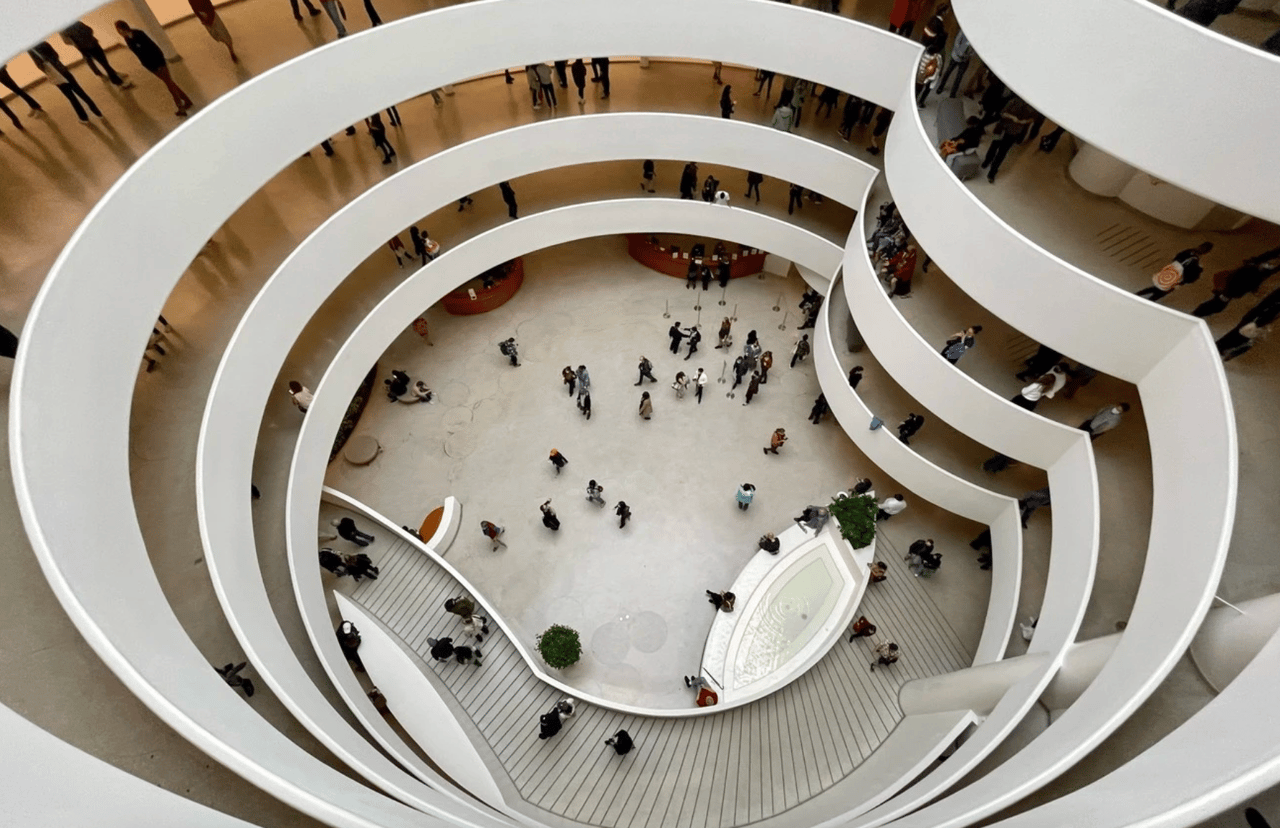
The Solomon R. Guggenheim Museum is one of New York City’s most recognizable landmarks, but its unusual design was not always celebrated. When Frank Lloyd Wright’s spiral masterpiece opened in 1959, critics questioned its unconventional shape, comparing it to everything from a washing machine to an upside-down bowl. Today, however, the Guggenheim is considered one of the world’s most important examples of modern architecture.
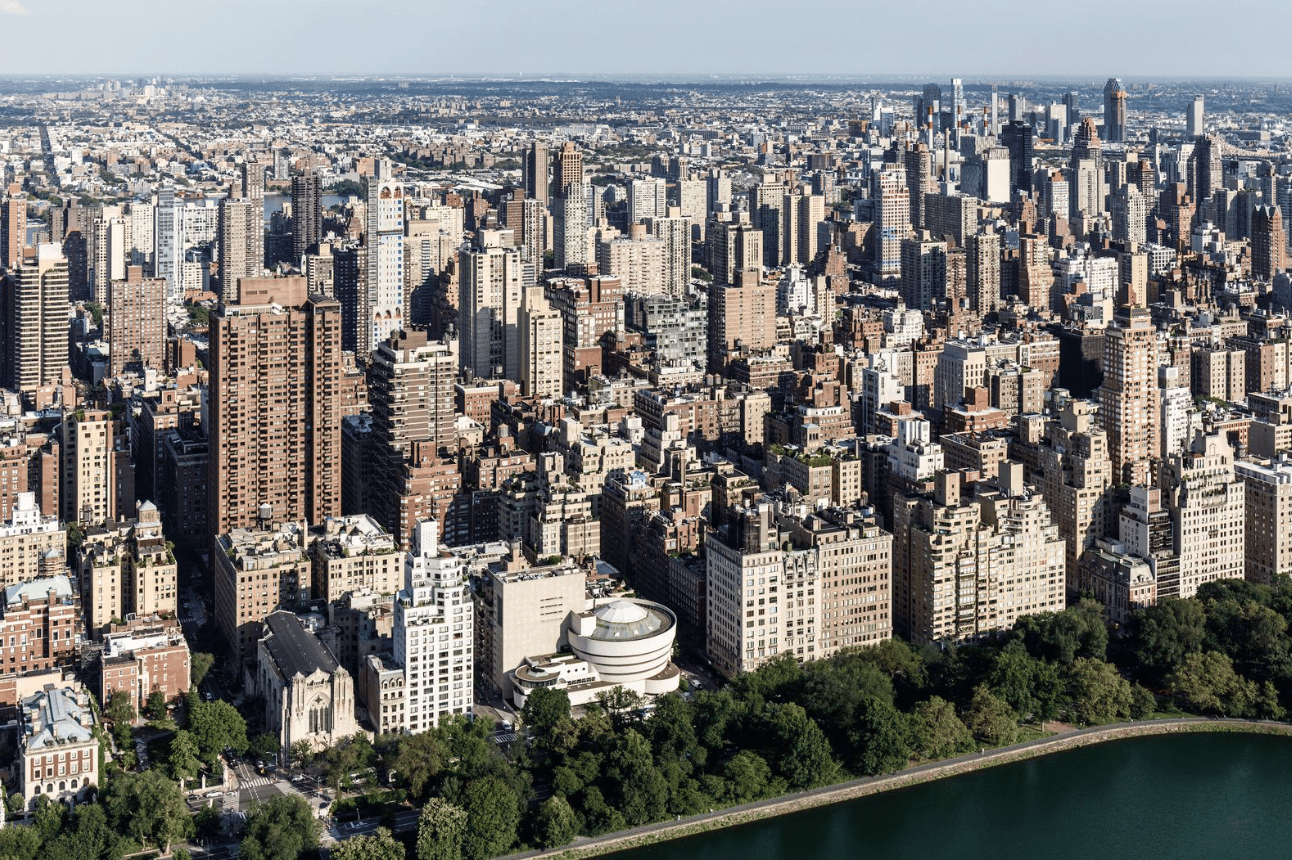
Located on Fifth Avenue beside Central Park, the museum was created to offer visitors a new way to experience art. Its curved galleries, continuous ramp, and innovative design reflect Wright’s belief that architecture should work together with its surroundings. Here are some fascinating facts about this iconic building:
1. Wright originally wanted the museum to be red
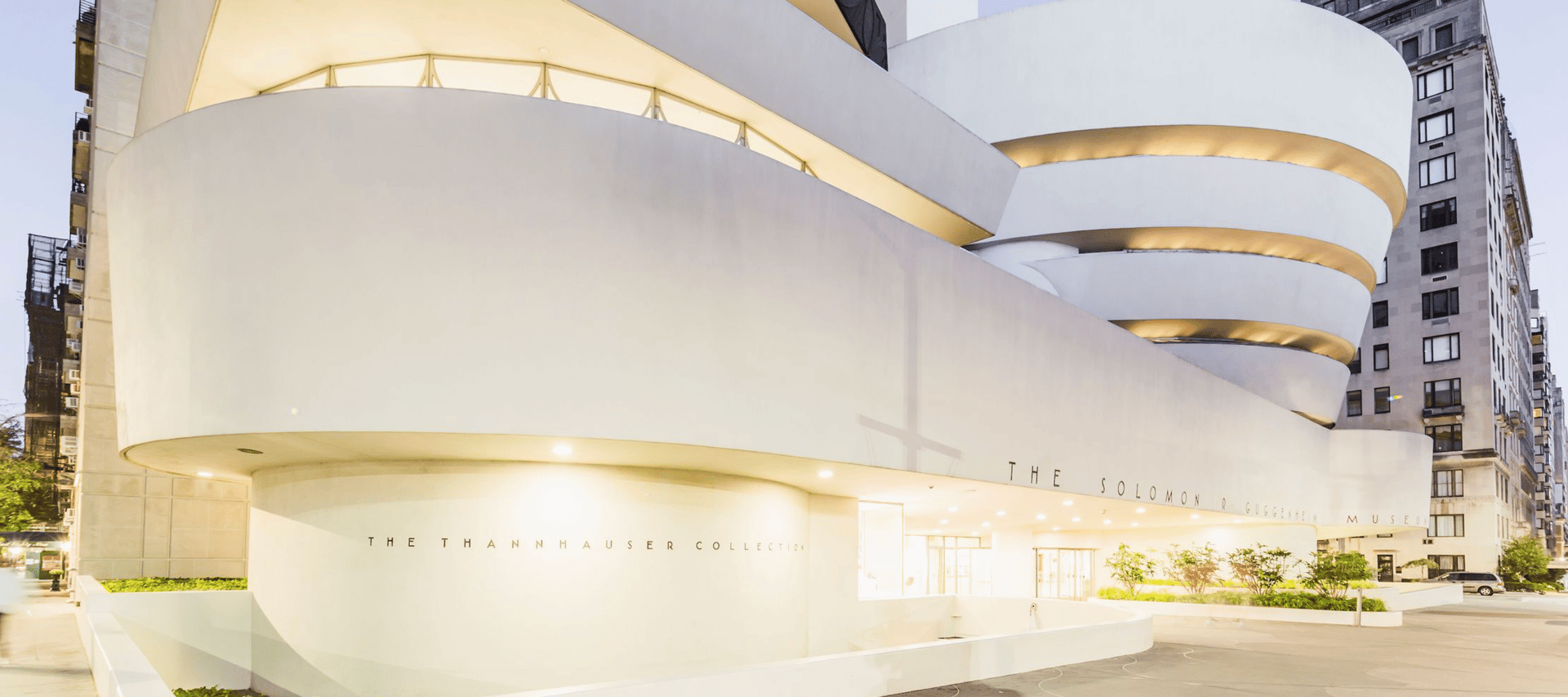
The Guggenheim’s famous light exterior almost had a completely different look. Wright planned to cover the building in red marble, believing the color represented creativity, but the idea was rejected by Solomon R. Guggenheim and Hilla Rebay.
2. The museum was once a yellow-brown color
The building’s original exterior was not the pale gray seen today. During restoration work, experts discovered an earlier brownish-yellow paint layer before deciding to keep the familiar gray appearance.
3. The spiral ramp stretches over 1,400 feet
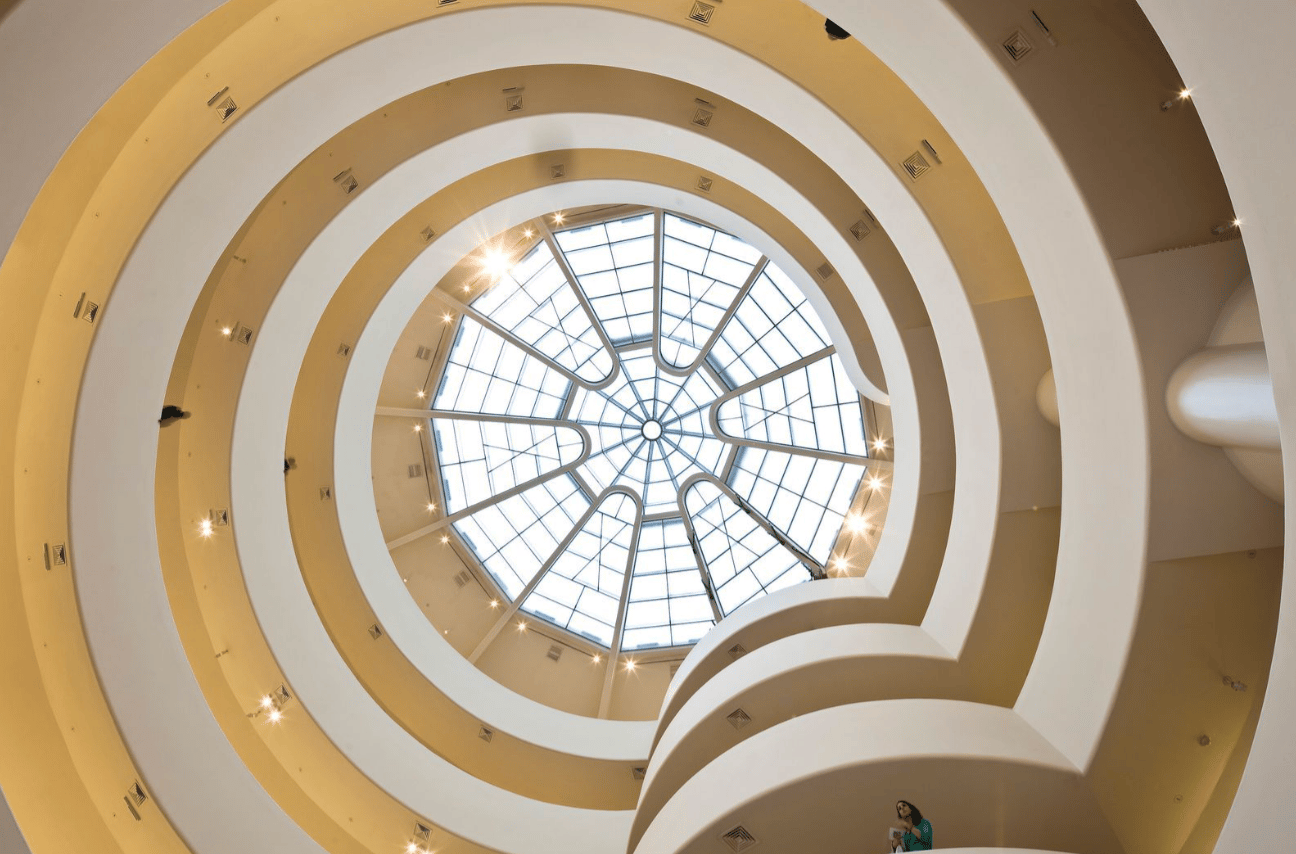
The museum’s famous interior walkway extends more than a quarter-mile and allows visitors to view artwork while moving through the building’s unique circular design.
4. Wright imagined an even more futuristic building
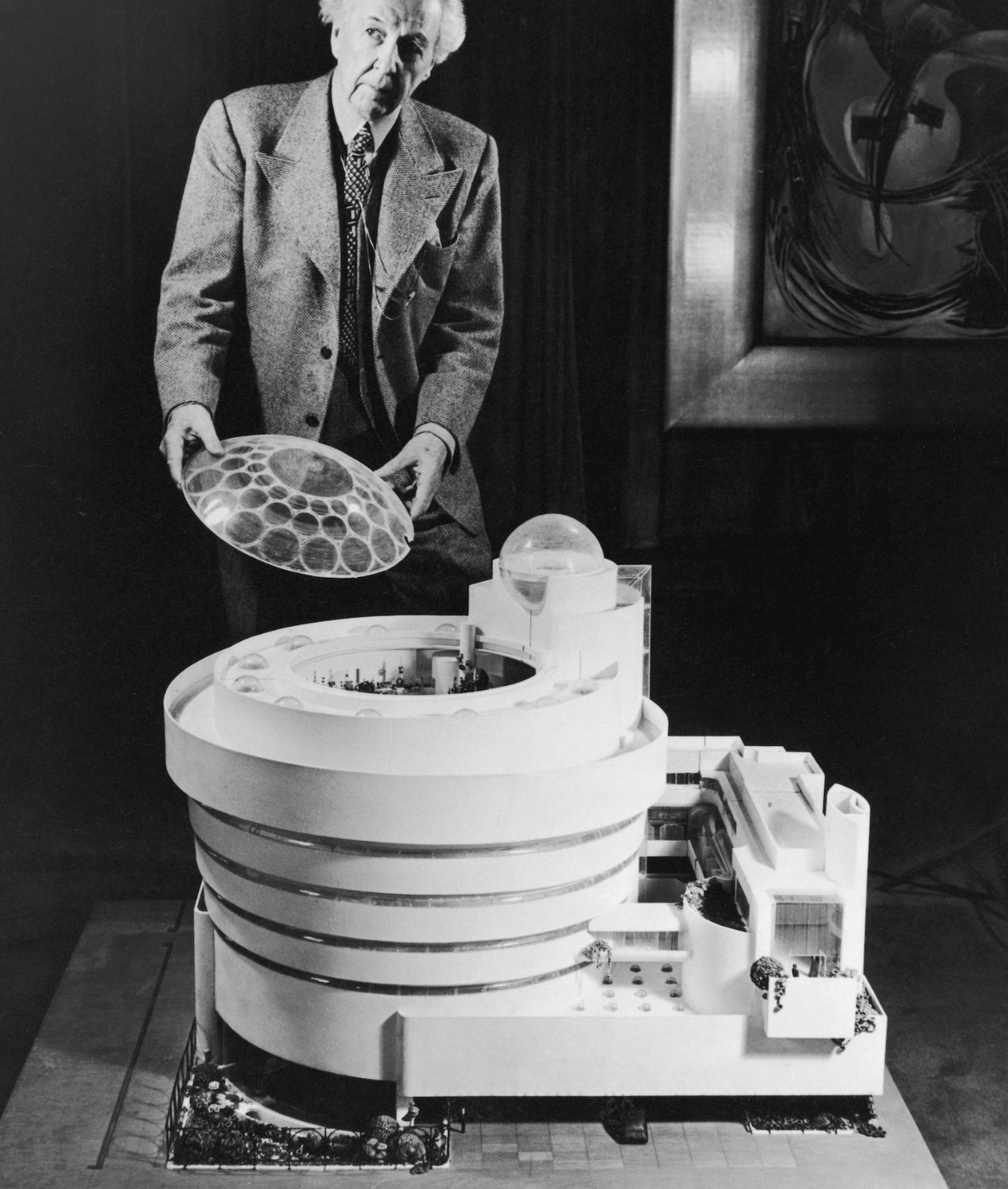
Original plans included a glass elevator and a spherical observation deck, but budget limitations prevented those features from being built.
5. The Guggenheim became a landmark unusually quickly
The museum received New York City landmark status when it was only 31 years old and later became a National Historic Landmark in 2008.
6. The interior is constantly maintained
The museum’s white walls require regular touch-ups. Staff members repaint small sections frequently to keep the galleries looking fresh.
7. The curved walls were designed with art in mind
Wright created the gallery walls to tilt outward like an artist’s easel, allowing artwork to be viewed in a more natural setting.
8. Many artists originally disliked the design
Before opening, some artists criticized the building’s curved spaces, arguing they were not ideal for displaying traditional artwork.
9. Wright left his signature on the building
A small red ceramic tile featuring Wright’s initials can be found on the museum’s exterior, similar to a personal signature on a work of art.
10. The Guggenheim is a UNESCO World Heritage Site
In 2019, the museum was recognized as part of UNESCO’s list honoring Frank Lloyd Wright’s most significant architectural achievements.
11. The museum’s tower was planned from the beginning
The addition behind the main building was based on Wright’s original plans, although it was not completed until decades later.
12. Wright wanted to call it the “Archeseum”
The architect believed the building needed a unique name and suggested “Archeseum,” but the idea was ultimately rejected.
13. Wright and Guggenheim never saw the finished museum
Solomon R. Guggenheim died ten years before the museum opened, and Frank Lloyd Wright passed away just months before its completion.
More than six decades later, the Guggenheim remains one of New York City’s most influential architectural treasures—a building that continues to challenge expectations and redefine how people experience art.