NYC Rental Market
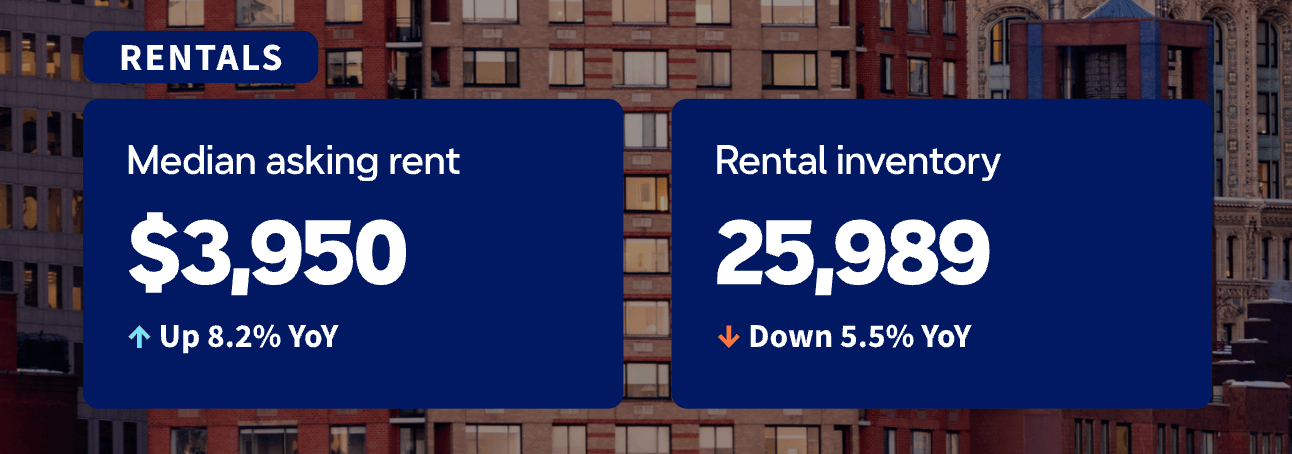
- As demand continued to outpace supply, the citywide median asking rent rose 8.2% year-over-year to $3,950.
- Inventory declined annually for the 24th consecutive month in Manhattan, the longest streak ever recorded, as the borough sat out the city’s rental construction boom.
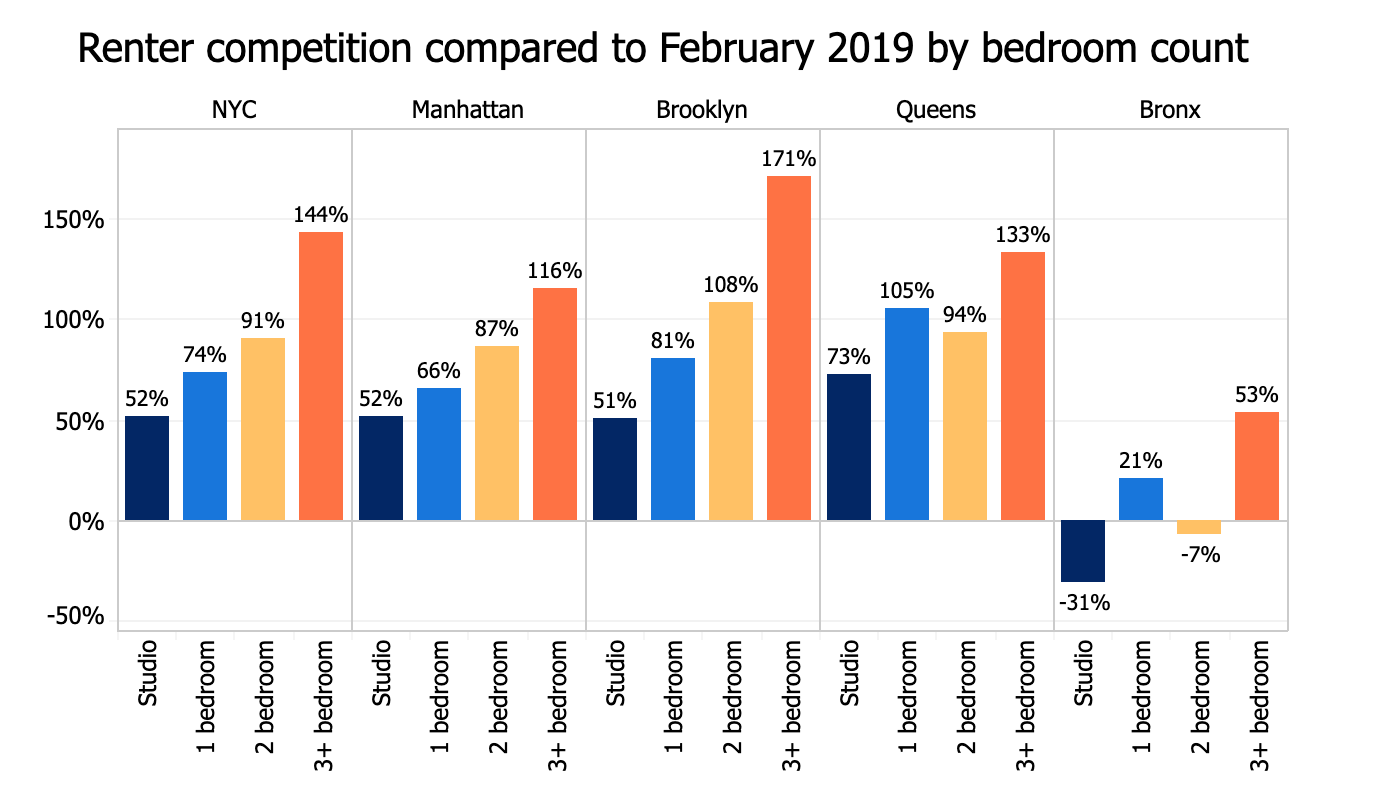
- While competition cooled from last year, renters still faced fierce competition, with the average listing in NYC receiving 52.1% more inquiries than in February 2019.
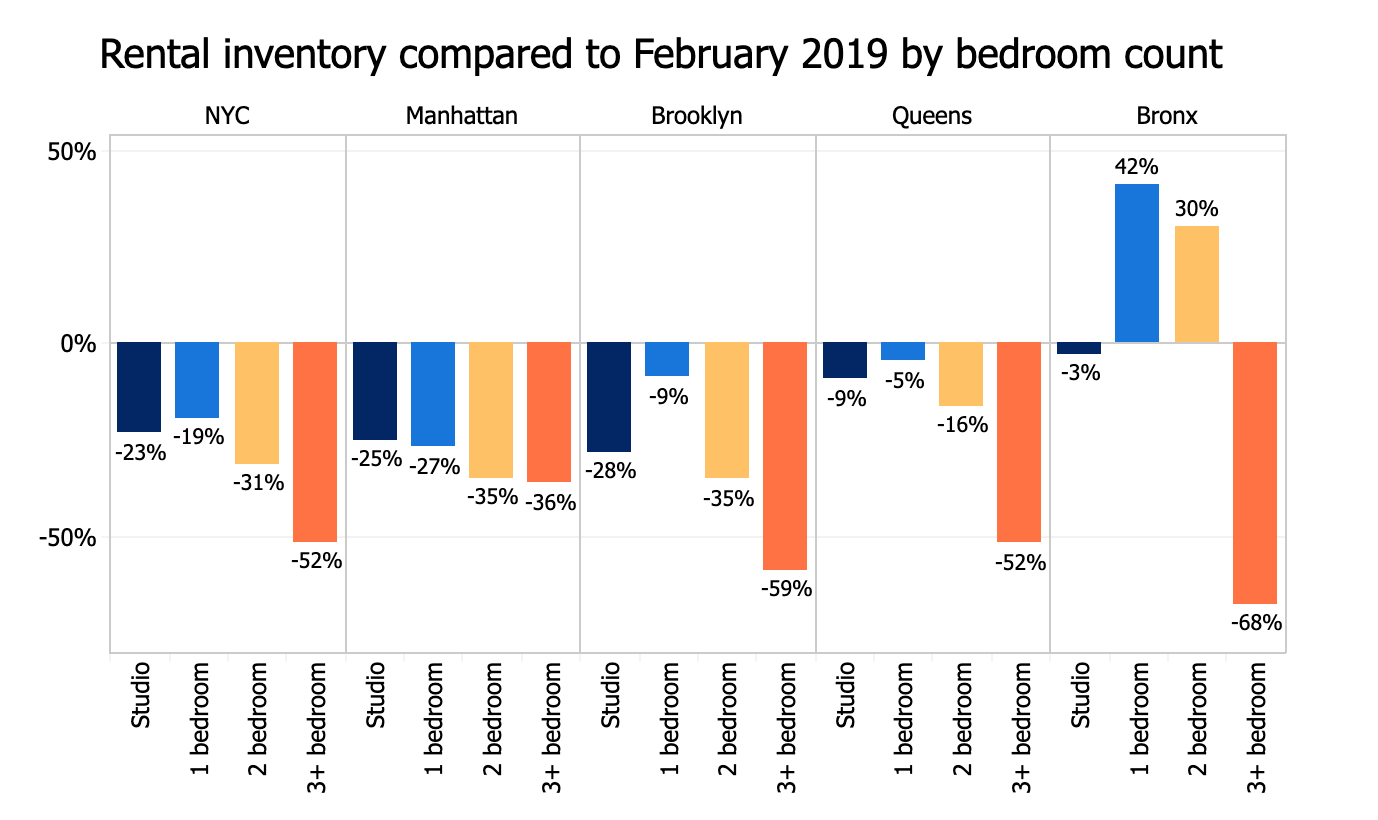
- Renters looking for two or more bedrooms faced the most challenging market, with competition up more than twofold and inventory down 38.8% from pre-pandemic levels.
- Brooklyn saw the most new rentals with at least two bedrooms last year, with 42.3% of new construction units offering two or three bedrooms, compared to 27.2% in Manhattan.
New York City rental inventory fell 5.5% from a year ago to 25,989 units in February. As demand continued to outstrip rental supply, the citywide median asking rent increased 8.2% year-over-year to $3,950.
Manhattan led the decline in the city’s inventory with a 3.5% drop in February — marking the 24th consecutive month of year-over-year declines and the longest streak of consecutive declines ever recorded. Rental supply in the borough has not kept up with surging demand since the onset of return-to-office policies in 2022, leading to declining vacancy rates and accelerating rent growth.
In February, Manhattan’s median asking rent rose 6.9% year-over-year to $4,700, a record high since last summer. In Brooklyn and Queens, as competition spread, the median asking rent rose 7.2% to $3,750 and 5.0% to $3,150, respectively. With low vacancy rates and resilient renter demand, NYC is poised to see faster rent growth in 2026.
Manhattan sat out NYC’s new development rental boom
As housing production ramped up in NYC over the past five years, new developments have been rapidly expanding the rental supply. In 2025, 18,618 new construction rental units joined the market, a 36.6% increase from 2024. We define new construction rentals as units in buildings completed in the current or prior year, considering a lag between completion and phased leasing. In 2025, 360 buildings across the city completed that year or the year prior entered the market.
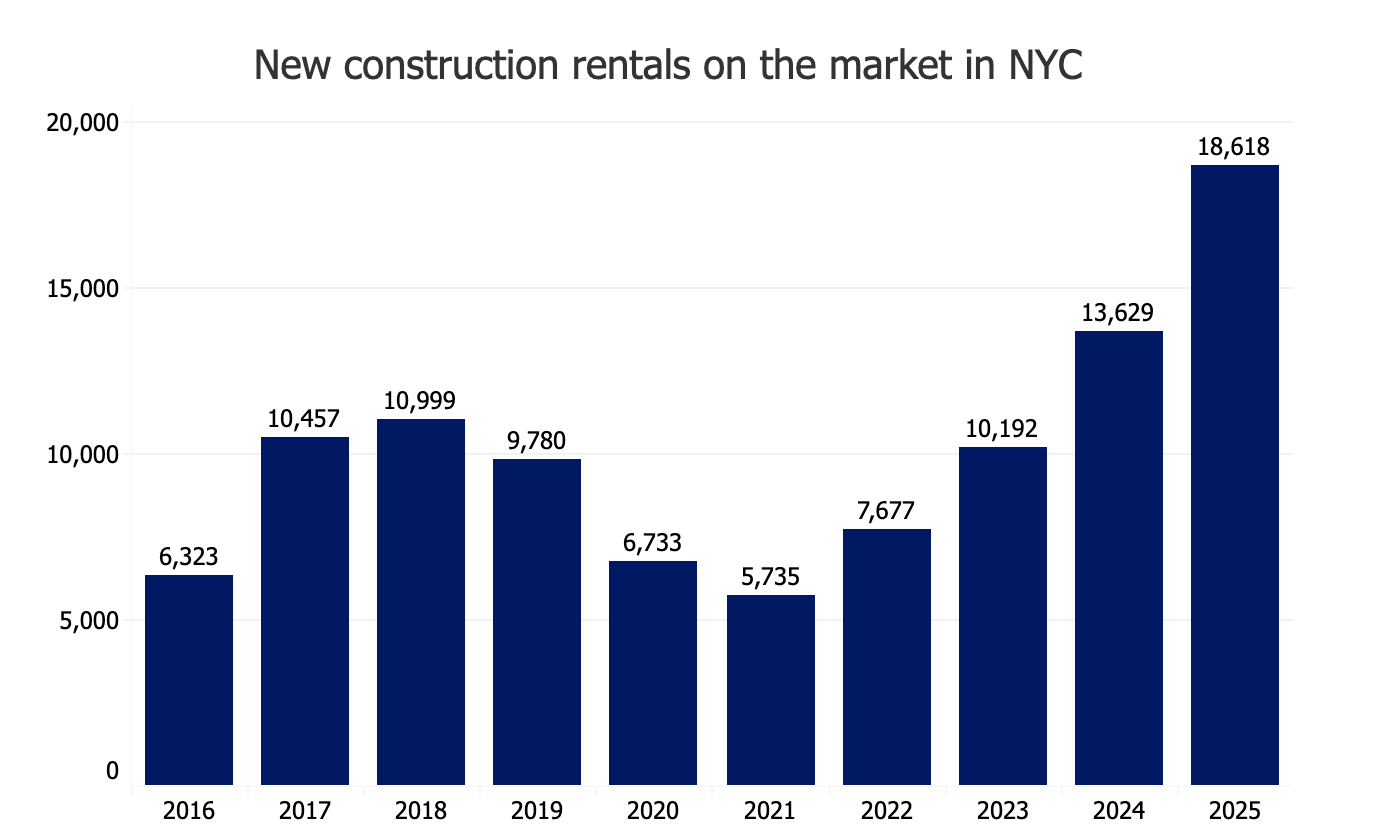
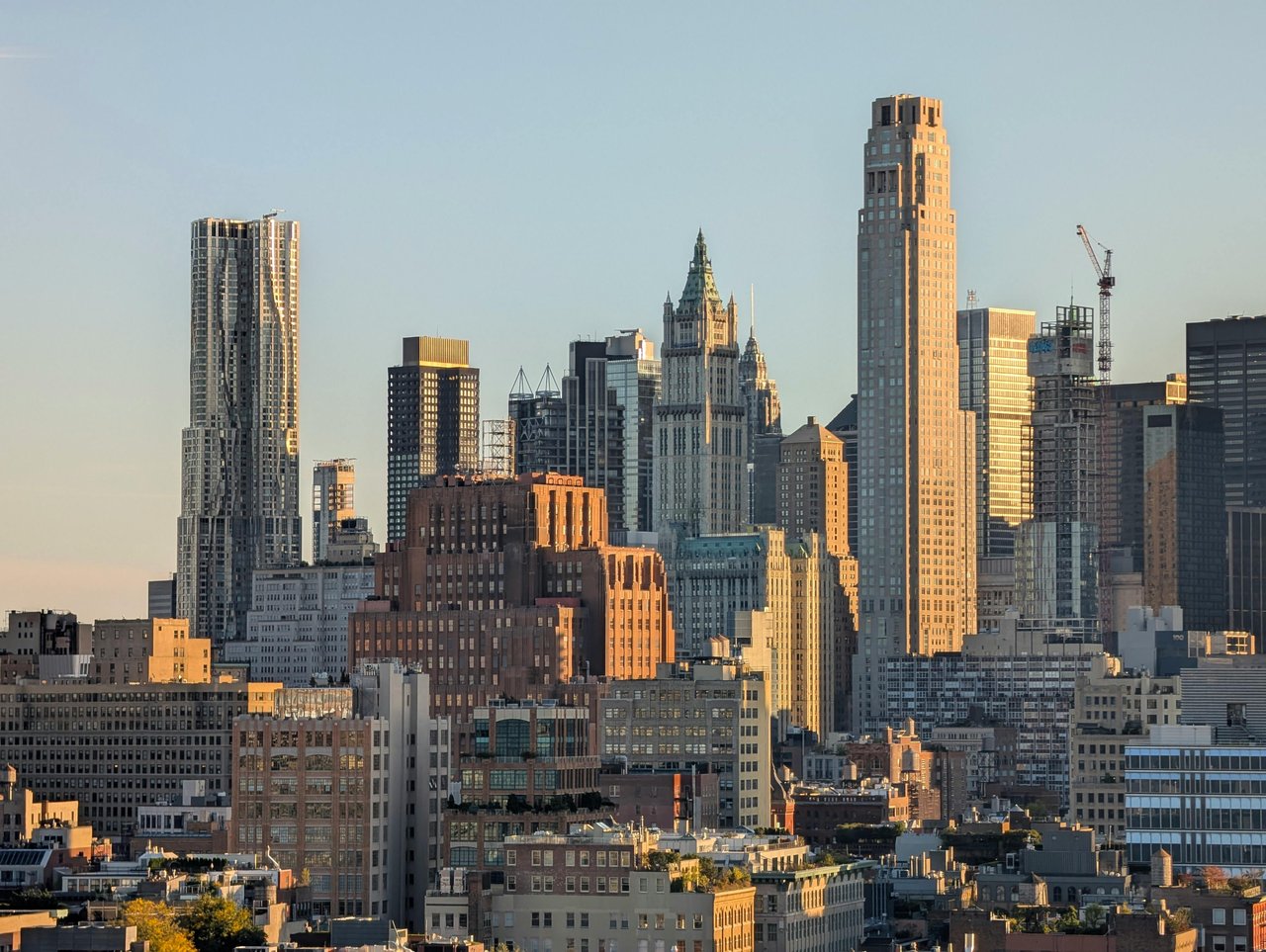
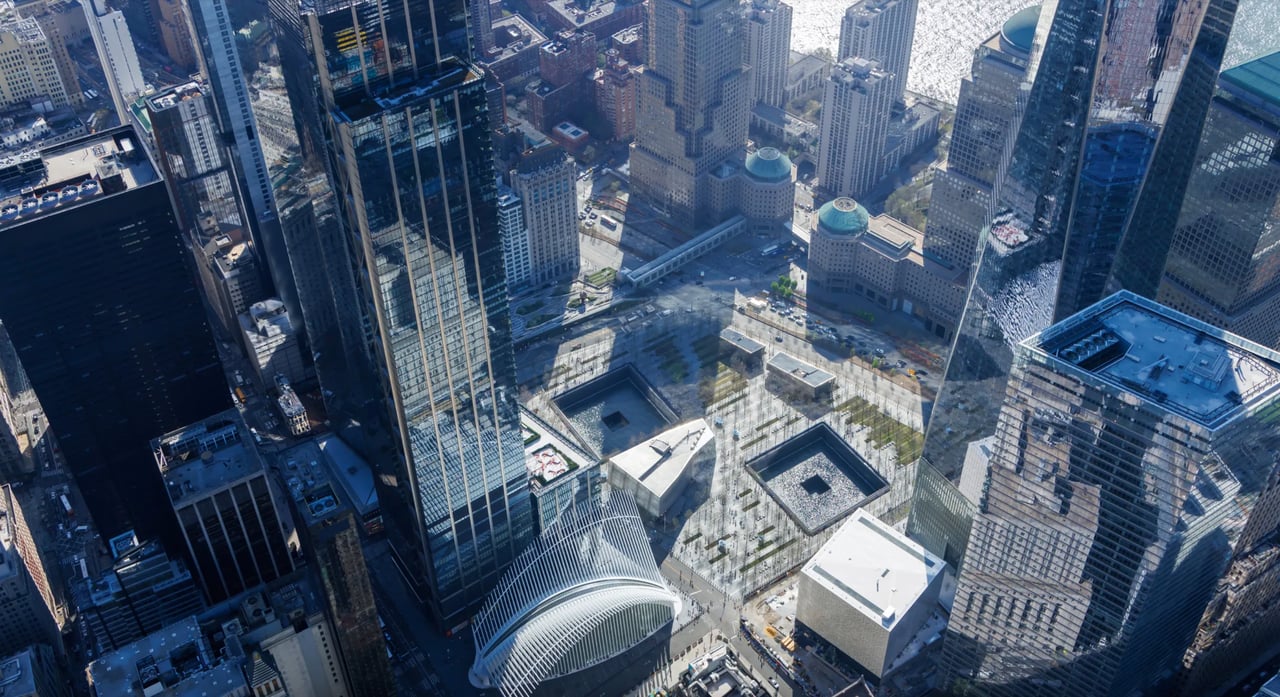
However, Manhattan was slow to catch up. Among the 18,618 new construction rentals across the city in 2025, just 2,575 units were in Manhattan. While several large-scale office-to-residential conversions have begun leasing in the Financial District in recent years, the borough’s new rental supply has been low compared to other boroughs. By comparison, Brooklyn saw 11,167 new units, more than four times that of Manhattan. In Queens, 3,644 units were added.
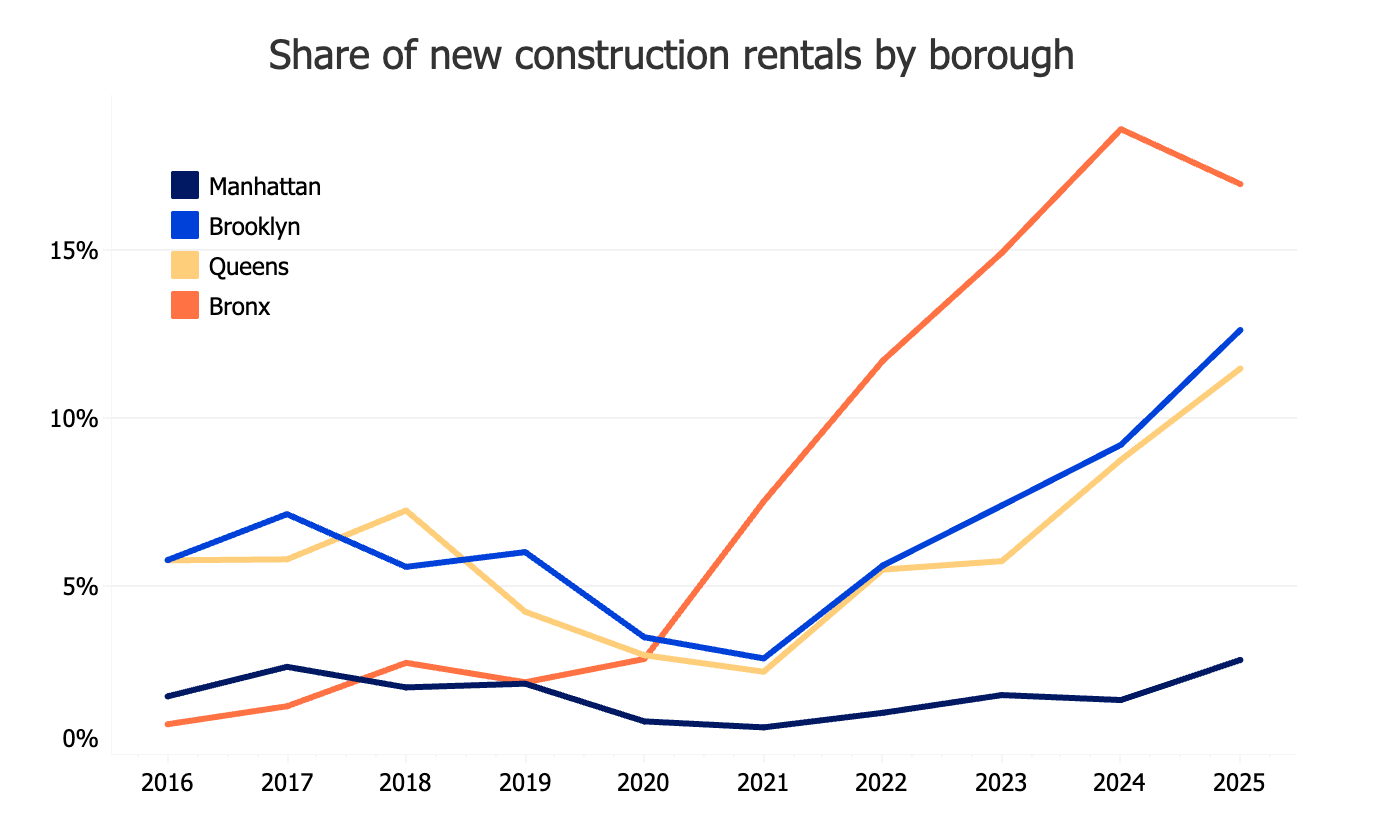
As a result, new construction rentals make up a tiny fraction of the overall Manhattan market. Compared to all new rental listings that hit the borough’s market, just 2.8% were in new developments in 2025. By contrast, one in five new rentals in the Bronx was new construction, the highest in NYC. In Brooklyn and Queens, 12.6% and 11.5% of rentals were new construction.
With limited new construction units to meet demand, renters have been staying put or competing for existing units in prewar properties, which are already located in desirable areas. In Manhattan, rent growth for prewar units has been soaring, narrowing the price gap between new developments that often command higher prices due to their modern finishes and popular amenities. In February, the median asking rent for prewar buildings in Manhattan increased by 10.4% year-over-year to $3,975. Meanwhile, the median asking rent for newer rentals built since 2010 in Manhattan remained unchanged at $5,600.
A large gap in housing supply remains
While new construction has surged, renter competition has been moderating since 2022 when the onset of return-to-office policies led to a peak in renter demand. While competition has cooled since then, this hasn’t amounted to significant relief for renters, with the average listing in NYC still receiving 52.1% more inquiries than in February 2019.
Renters looking for apartments with more than one bedroom faced even fiercer competition. Rentals with two bedrooms received 90.7% more inquiries on average than in February 2019, while units with three or more bedrooms received 143.6% more inquiries.
Compared to pre-pandemic levels, the city experienced the most significant shortfalls in rentals with two or more bedrooms. Two-bedroom rental inventory was 31.2% lower than in February 2019, while the inventory of rentals with at least three bedrooms was down 51.5%. Though more plentiful, studio and one-bedroom rental inventory was also down 19.4% and 23.1%, respectively, from February 2019.
The scarcity of apartments with more bedrooms can be challenging for families or renters looking to share costs. Amid strong competition, the citywide median asking rent for two-bedroom units rose 10.9% year-over-year to $4,430 in February 2026, while the median for apartments with at least three bedrooms increased 11.0% to $4,995.